


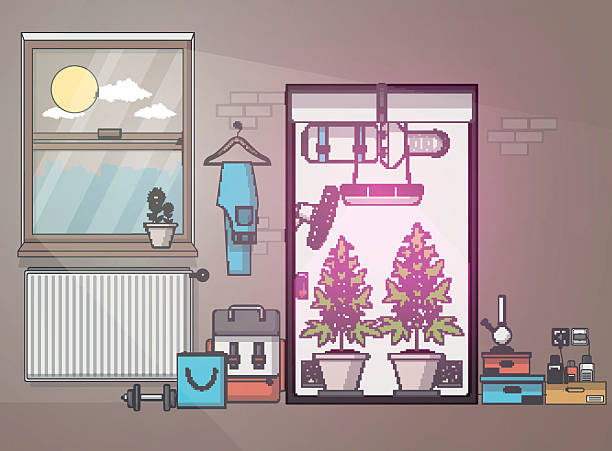
Choosing suitable lighting is an important part of creating an effective indoor gardening environment. Artificial lighting helps indoor plants receive consistent illumination when natural sunlight is limited. Among the different brands available, Spider Farmer has become a recognizable name in the indoor gardening equipment market, offering LED grow lights in various sizes, power ratings, and configurations.
Whether you are setting up a small indoor garden or upgrading an existing lighting system, selecting the right model requires careful consideration. Factors such as coverage area, power consumption, light spectrum, cooling performance, and installation options can influence your decision.
The following steps explain how to choose Spider Farmer LED grow lights for an efficient and practical indoor lighting setup.
Step 1 – Understand Your Indoor Gardening Requirements
Before purchasing any LED grow light, identify the requirements of your indoor gardening space. Different plants have different lighting needs, and the appropriate equipment depends on the growing environment.
Consider the available installation area, plant varieties, natural light conditions, and your overall budget.
For smaller indoor gardens, compact lighting fixtures may be sufficient. Larger spaces may require more powerful lighting systems or multiple fixtures.
Understanding these requirements helps narrow down the available Spider Farmer models and prevents purchasing equipment that is either unsuitable or unnecessarily powerful.
Step 2 – Select the Appropriate Lighting Coverage
Coverage area is one of the most important specifications to examine when comparing LED grow lights.
Spider Farmer offers different lighting models designed for different indoor spaces. For example, its G3000 model is specified for a core coverage area of 2 x 2 feet, with a maximum coverage area of 3 x 3 feet. Larger models are available for more extensive installations.
Spider Farmer EU+1
Before purchasing, measure your available space and compare it with the manufacturer’s recommended coverage.
Also consider light distribution across the entire area rather than focusing only on the brightness directly beneath the fixture.
Step 3 – Compare Power Consumption and Efficiency
Power consumption affects the ongoing cost of operating an indoor lighting system.
Spider Farmer LED products are available in different power ratings, allowing buyers to compare equipment according to their space and requirements.
However, wattage alone does not determine lighting performance. It is also useful to examine photosynthetic photon flux (PPF) and photosynthetic photon efficacy (PPE).
These measurements provide additional information about light output and how efficiently a fixture converts electricity into photosynthetically useful light.
Comparing these specifications can help identify a suitable balance between lighting performance and electricity consumption.
Step 4 – Look for Full Spectrum Lighting
Light spectrum is another important consideration when choosing an LED grow light.
Many Spider Farmer models offer full-spectrum lighting configurations that combine different wavelengths, including blue, red, and white-light components.
These combinations are designed for different indoor plant requirements and can support various stages of plant development.
Before purchasing, examine the manufacturer’s spectrum specifications and product documentation. Make sure the selected lighting system is appropriate for the intended plant species. The store offers gardening accessories for customers who want to Buy Fabric Plant Pots for their plants.
Step 5 – Examine the Cooling System
Heat management is an important part of indoor lighting. Although LED technology generally produces less radiant heat than many traditional lighting systems, LED fixtures still generate heat during operation.
Spider Farmer offers different fixture designs, including bar-style models that allow airflow between the lighting bars.
When comparing products, consider:
- Cooling system design
- Heat dissipation performance
- Ventilation requirements
- Operating temperature range
- Recommended installation conditions
A suitable cooling arrangement helps maintain reliable equipment operation and makes indoor temperature management easier.
Step 6 – Consider Adjustable Brightness Features
Some Spider Farmer LED grow lights include dimming functions that allow users to adjust brightness levels.
This feature provides additional flexibility when managing indoor lighting. Instead of operating at maximum brightness continuously, users can select settings according to the manufacturer’s recommendations and the requirements of their plants.
Certain models also offer smart control features, including Wi-Fi and Bluetooth connectivity.
For example, selected G Series models support app-based control and compatible lighting controllers. These features can make monitoring and adjusting lighting more convenient.
spider-farmer.com+1
Step 7 – Compare Different Spider Farmer Models
Spider Farmer offers multiple LED grow light models, making it important to compare their individual specifications before purchasing.
Some examples include:
- G1500 – A 150W model designed for smaller indoor growing areas.
- G3000 – A 300W model with a specified core coverage of 2 x 2 feet.
- G5000 – A 480W model designed for larger indoor gardening arrangements.
- G8600 – An 800W model with a specified core coverage of 4 x 4 feet.
Each model has different dimensions, coverage recommendations, and technical specifications. Comparing these details helps buyers select equipment that matches their available space.
Spider Farmer EU+3
Step 8 – Check Installation and Compatibility
Before ordering an LED grow light, check whether it is compatible with your existing indoor gardening equipment.
Consider the mounting system, fixture dimensions, electrical requirements, hanging accessories, and available installation space.
Some lighting products include adjustable hanging accessories and separate driver components. Others may require additional mounting equipment.
If you are using a grow tent, check the recommended tent dimensions and ensure that the lighting fixture can be installed securely.
Always follow the manufacturer’s electrical and installation instructions.
Step 9 – Review Warranty and Product Quality
Product quality and warranty coverage are important when purchasing indoor gardening equipment.
Before choosing a Spider Farmer LED model, review its construction materials, electrical components, cooling design, and warranty conditions.
Customer reviews can also provide useful information about product performance, packaging, and customer service.
Buying from a reliable retailer or authorized sales channel can make it easier to obtain genuine products and receive assistance if problems arise.
Step 10 – Compare Prices and Available Offers
The final step is to compare prices before completing your purchase.
Different Spider Farmer models have different prices depending on their power ratings, features, and configurations. Online grow shops may also offer seasonal discounts or promotional packages.
Consider the complete purchasing cost, including:
- Product price
- Shipping charges
- Applicable taxes and customs fees
- Warranty coverage
- Additional installation accessories
Avoid choosing a product based exclusively on its lowest price. A suitable lighting system should provide the features and specifications required for your indoor gardening space.
Conclusion
Choosing Spider Farmer LED grow lights becomes easier when you understand your indoor gardening requirements and compare the available product specifications.
Coverage area, power consumption, light spectrum, cooling design, adjustable brightness, and installation compatibility are all important factors to consider.
By researching different models and checking manufacturer documentation, buyers can make informed decisions and select suitable lighting equipment. A carefully chosen LED lighting system can provide consistent illumination, improve energy management, and make everyday indoor gardening more convenient.
